
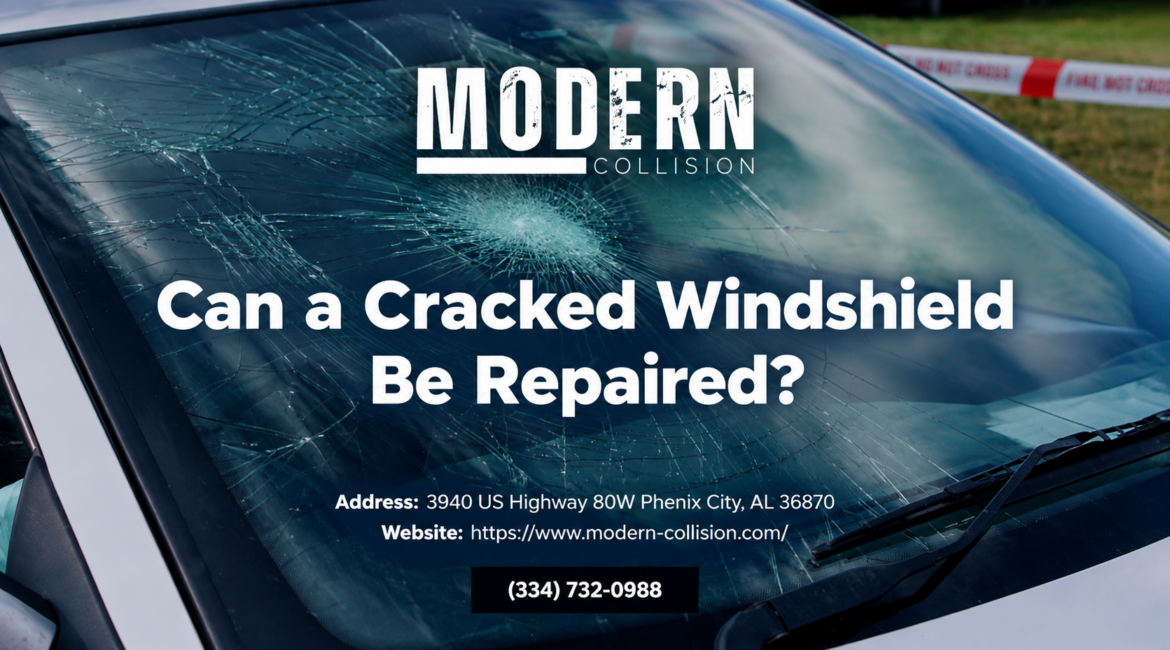
A cracked windshield may be repairable when the damage is limited, away from critical areas, and meets professional repair criteria. Cracks near the edge, in the driver’s primary viewing area, or around cameras and sensors may require replacement. A technician can assess the damage and determine the safest repair option.
Table of Contents
ToggleKey Takeaways
- A cracked windshield may qualify for repair when damage is limited, away from the edge, driver viewing area, and ADAS sensor zones.
- Repairability depends on damage type, location, depth, and glass condition, assessed against repair facility and OEM guidelines for each vehicle.
- Professional windshield repair uses resin injection to fill eligible damage, stabilize the glass, and help prevent further spreading.
- Cracks reaching the edge, obstructing the driver’s primary viewing area, or affecting forward-facing camera zones typically require replacement.
- Windshield replacement may require ADAS recalibration when forward-facing cameras or sensors are integrated with the glass or mounting area.
What Determines Whether a Windshield Can Be Repaired
A cracked windshield may be repaired when the damage meets the repair facility’s safety and repairability criteria. Technicians evaluate the type of damage, its location, depth, and extent, along with the condition of the surrounding glass.
There is no single size or shape rule that determines repairability for every vehicle or situation. Common factors technicians consider include:
- Damage type: Bull’s-eye breaks, star breaks, chips, and cracks can have different repair considerations.
- Location: Damage near the windshield edge or in the driver’s primary viewing area may require replacement.
- Depth and extent: Damage that penetrates deeply or involves multiple fractures may fall outside normal repair criteria.
- Surrounding glass: Technicians inspect the condition of the glass around the damaged area before determining whether repair is appropriate.
- ADAS components: Damage near forward-facing cameras or sensors requires additional evaluation because windshield work can affect system performance.
Some isolated damage can be stabilized with resin when the glass remains suitable for repair. Long, complex, intersecting, or edge-reaching cracks are more likely to require replacement, but the final decision should be made after a professional inspection.
How Professional Windshield Repair Works
Professional windshield repair begins with an inspection of the damaged area. The technician evaluates the fracture and surrounding glass, cleans the affected area, and determines whether the damage can be safely repaired. When repair is appropriate, specialized resin is injected into the damaged area to fill the fracture and help stabilize the glass.
The resin is then cured according to the repair process, creating a bond within the damaged area. Proper resin application can help prevent the damage from spreading while improving the appearance and structural condition of the repaired area. The technician then inspects the repair to confirm that the damage has been properly treated.
Repairing eligible damage can preserve the vehicle’s original windshield and avoid the additional steps associated with replacement. When replacement is necessary, the process may involve removing the existing glass, installing replacement glass with the appropriate adhesive, and completing any required ADAS calibration.
When Windshield Replacement Is Necessary
Windshield replacement may be necessary when damage is too extensive to repair safely or when its location creates a safety or visibility concern. Technicians typically consider the following factors:
- Edge damage: Cracks that reach the outside edge may fall outside normal repair criteria.
- Driver visibility: Damage that significantly obstructs the driver’s primary viewing area may require replacement.
- Glass integrity: Damage that compromises the windshield’s integrity may not be safely repairable.
- Extensive damage: Multiple damaged areas or complex fractures may require replacement.
- Previous repairs: A previous repair that has not adequately stabilized the glass may affect the repair decision.
- Vehicle-specific requirements: Manufacturer procedures and windshield-mounted cameras or sensors may affect whether replacement is appropriate.
The technician should evaluate the entire windshield rather than relying on crack length alone. If replacement is necessary, the process involves removing the damaged glass, preparing the frame, installing the replacement windshield with the appropriate adhesive, and allowing the adhesive to reach the required safe-drive condition.
On vehicles equipped with windshield-mounted cameras or sensors, ADAS recalibration may also be required after replacement according to the manufacturer’s procedures. Modern Collision uses OEM-fit, safety-rated glass and performs in-house ADAS recalibration when required by the vehicle manufacturer or applicable repair procedures.
Why Prompt Repair Matters
Small windshield chips and cracks can spread when the glass is exposed to temperature changes, road vibration, potholes, and additional impacts. Addressing damage early can help stop a windshield crack from spreading and preserve the possibility of repair before the damage becomes more extensive. A prompt inspection also helps drivers understand whether the damage requires repair or replacement before it affects visibility or other safety considerations.
The windshield serves more than a visibility function. It contributes to the vehicle’s structural integrity and supports occupant protection during a collision. Damage that reaches the edge, obstructs the driver’s primary viewing area, or compromises the glass should be professionally evaluated rather than left untreated.
Damage around a forward-facing camera or sensor mounting area also deserves prompt attention. If replacement is required, the vehicle may need ADAS recalibration before returning to service. Modern Collision evaluates windshield damage and determines the appropriate repair or replacement path based on the vehicle and condition of the glass.
Insurance, Shop Selection, and What to Watch For
Comprehensive auto insurance typically covers windshield damage caused by covered non-collision events, subject to the policy’s terms and deductible. Whether a policy covers a cracked windshield depends on the specific coverage, deductible, and circumstances of the damage. Some policies provide a reduced or waived deductible for eligible glass repairs, while windshield replacement may be subject to the comprehensive deductible unless the policy includes a separate glass benefit or endorsement.
When discussing a windshield claim with the insurer, drivers should confirm:
- Deductible: How much the policy requires the driver to pay.
- Claim classification: Whether the windshield damage is handled as a comprehensive or other type of claim.
- Repair process: Whether the insurer has specific procedures for estimates, supplements, or payments.
- Parts requirements: Whether the insurer has requirements for replacement glass.
- ADAS recalibration: Whether calibration is required after windshield replacement.
Drivers should ask their insurer how the selected repair facility, estimate, replacement glass, and payment process will be handled, as requirements can vary by carrier and policy.
Once coverage and claim requirements are understood, the repair facility is another important consideration. Drivers may want to verify technician qualifications, glass quality, insurance coordination, and ADAS capabilities. These factors can help drivers choose the right auto body shop for windshield repairs and other collision-related work. Modern Collision is an I-CAR Gold Class certified auto body and collision repair shop with experience coordinating insurance claims, installing OEM-fit glass, and performing in-house ADAS recalibration when required.
Confirm the Repair Path Before the Crack Spreads
Modern Collision serves drivers across Phenix City, Lee County, Russell County, Columbus, Muscogee County, Harris County, Chattahoochee County, Auburn, and Opelika. A professional windshield assessment can determine whether the damage qualifies for repair or requires replacement while identifying any insurance or ADAS considerations.
Drivers who want to review the damage before visiting can send three photos for a free remote assessment. This initial review can help the team evaluate the visible damage and determine the next step for windshield repair or replacement. Modern Collision also coordinates with insurance carriers and provides OEM-fit glass and in-house ADAS recalibration when required.
Frequently Asked Questions
How long can a cracked windshield wait before repair?
A cracked windshield should be inspected promptly because temperature changes, road vibration, potholes, moisture, and additional impacts can cause damage to spread. Early evaluation helps determine whether the windshield remains repairable and allows a technician to address the damage before it affects visibility, safety, or ADAS sensor function.
Can a windshield with several small chips be repaired?
Several small chips may be repairable when they are appropriately located, do not compromise the glass, and meet the repair facility’s criteria. The technician evaluates the size, depth, spacing, and location of each damaged area. When chips qualify, resin injection can stabilize the damage without requiring replacement.
What damage makes repair impossible?
Damage that reaches the windshield edge, significantly obstructs the driver’s primary viewing area, compromises the glass, or involves complex or extensive fractures may require replacement. Damage around cameras or sensors may also require replacement, and the vehicle may need ADAS recalibration before returning to service.
Does comprehensive insurance cover windshield repair?
Comprehensive insurance typically covers windshield damage caused by covered non-collision events, subject to the policy’s terms and deductible. Some insurers, including State Farm and Geico, offer reduced or waived deductibles for eligible glass repairs, but coverage varies by policy and carrier. Drivers should confirm their deductible and glass benefits before authorizing repairs.
Is mobile windshield repair as effective as shop repair?
Mobile windshield repair can be appropriate for eligible damage that does not require windshield replacement, specialized equipment, or ADAS recalibration. In-shop service may be more appropriate when the damage requires detailed evaluation, replacement, calibration, or other vehicle-specific procedures. The condition of the glass and the vehicle’s requirements should determine the service approach.
Why does windshield replacement require ADAS recalibration?
Some vehicles use forward-facing cameras or sensors mounted near or integrated with the windshield to support systems such as lane departure warning, automatic emergency braking, and adaptive cruise control. Replacing the windshield can affect the positioning or optical reference of these systems, so recalibration may be required according to the vehicle manufacturer’s procedures.
About the Author
Written by the Modern Collision team.
Modern Collision is a family-owned, I-CAR Gold Class certified auto body and collision repair shop with 27 years of experience serving Phenix City, Lee County, Russell County, and the greater Columbus metro area. The shop holds 10 OEM certifications and specializes in OEM-fit glass replacement, in-house ADAS recalibration, and insurance claim coordination.
Last updated: September 2026